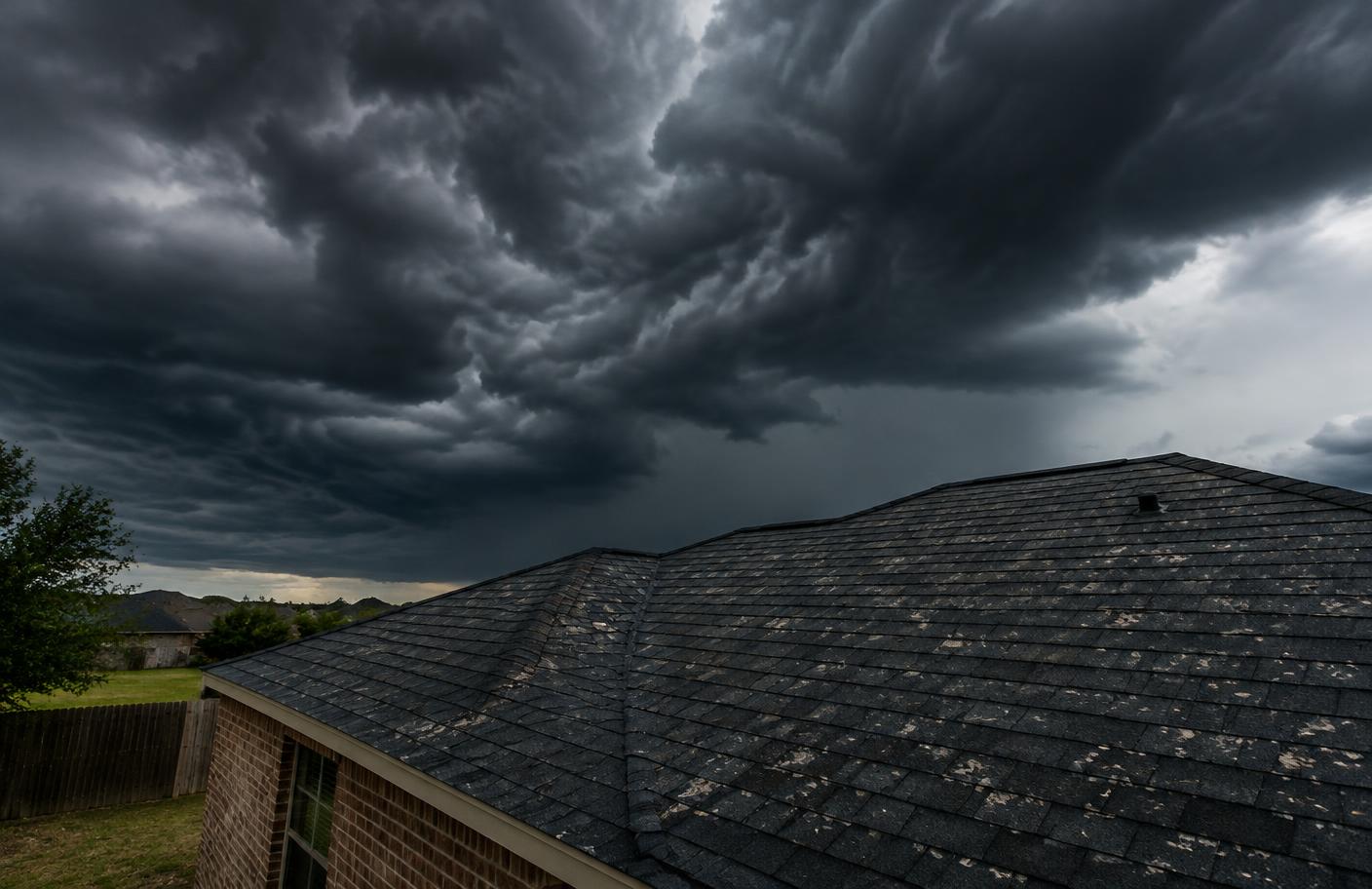
Your roof takes the brunt of every storm. In the Tomball and Houston area that means hail, high winds, tropical rain and long stretches of intense heat — each of which damages a roof in a different way.
01
Hail
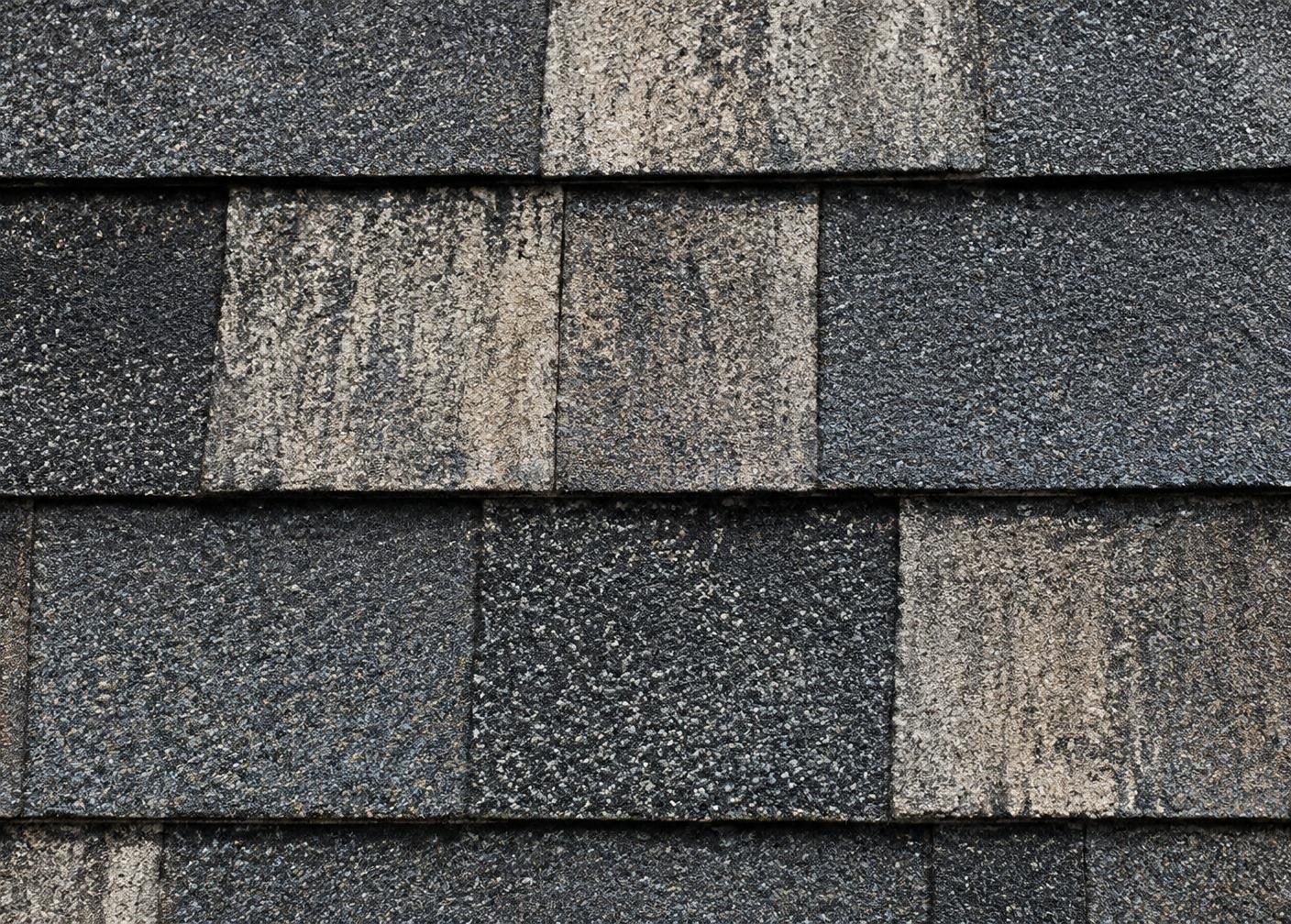
Hail knocks granules off asphalt shingles, leaving dark bruises or bare spots that age quickly in the sun. Larger hail can crack shingles or dent metal. Damage is often invisible from the ground, so an inspection after a hailstorm is worth it.
02
High Winds
Wind lifts shingle edges and breaks their seal, then tears them off entirely. Once one goes, the next gust can take more. Flying debris and falling branches add punctures and gouges.
03
Heavy Rain
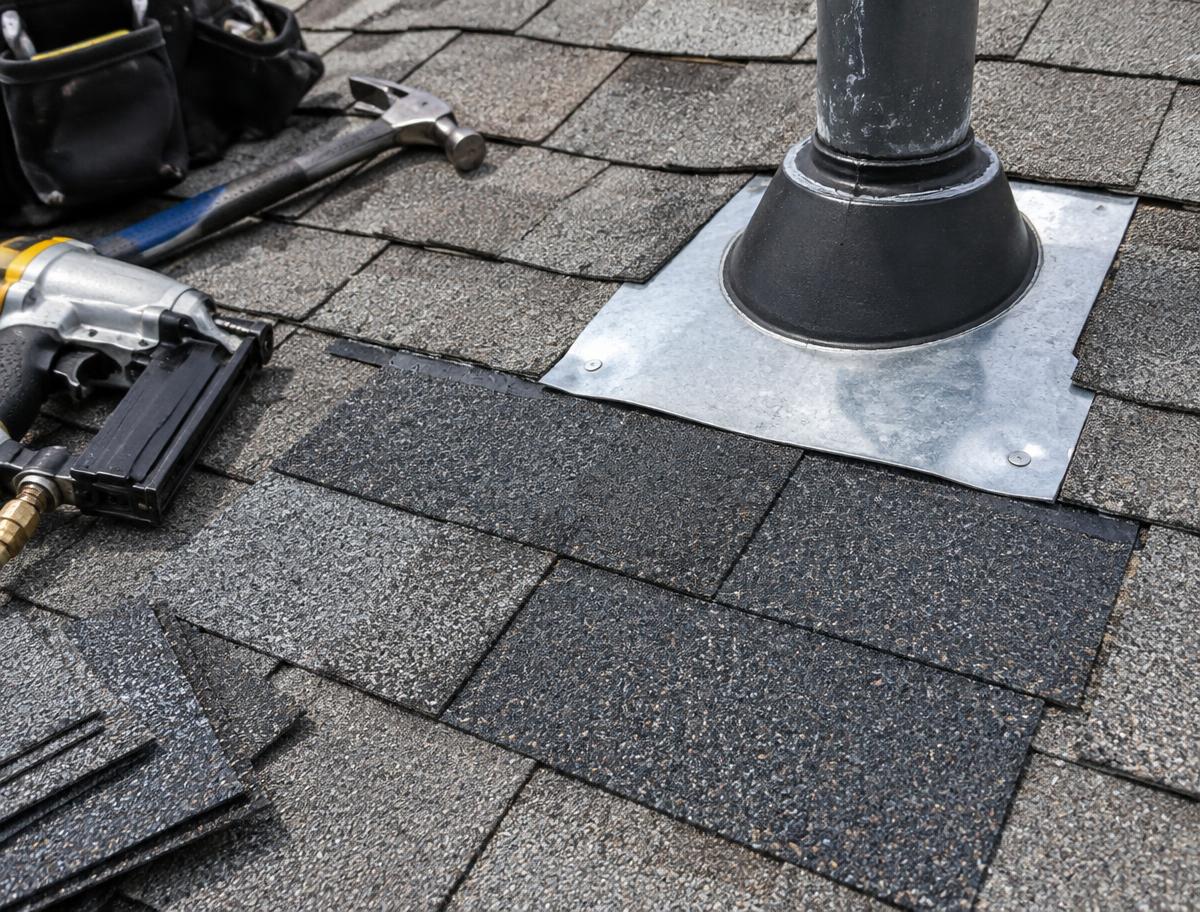
Tropical storms and downpours find any weakness — lifted flashing, a cracked vent boot or clogged gutters that back water under the roof edge. Slow leaks can soak decking and insulation long before a ceiling stain appears.
04
Heat and Sun
Months of intense UV and attic temperatures dry out shingles, making them brittle and shortening their life — especially if the attic isn't well ventilated.
05
Freezes
Hard freezes are rare here but do happen. Water trapped in cracks expands as it freezes, widening gaps, and cold shingles are more likely to crack.
06
What to Do After a Storm
Stay safe
Don't climb onto the roof. Look from the ground for missing shingles, debris or dented gutters and vents.
Check inside
Look for ceiling stains, drips and damp spots in the attic.
Document
Take dated photos of any damage, inside and out.
Get an inspection
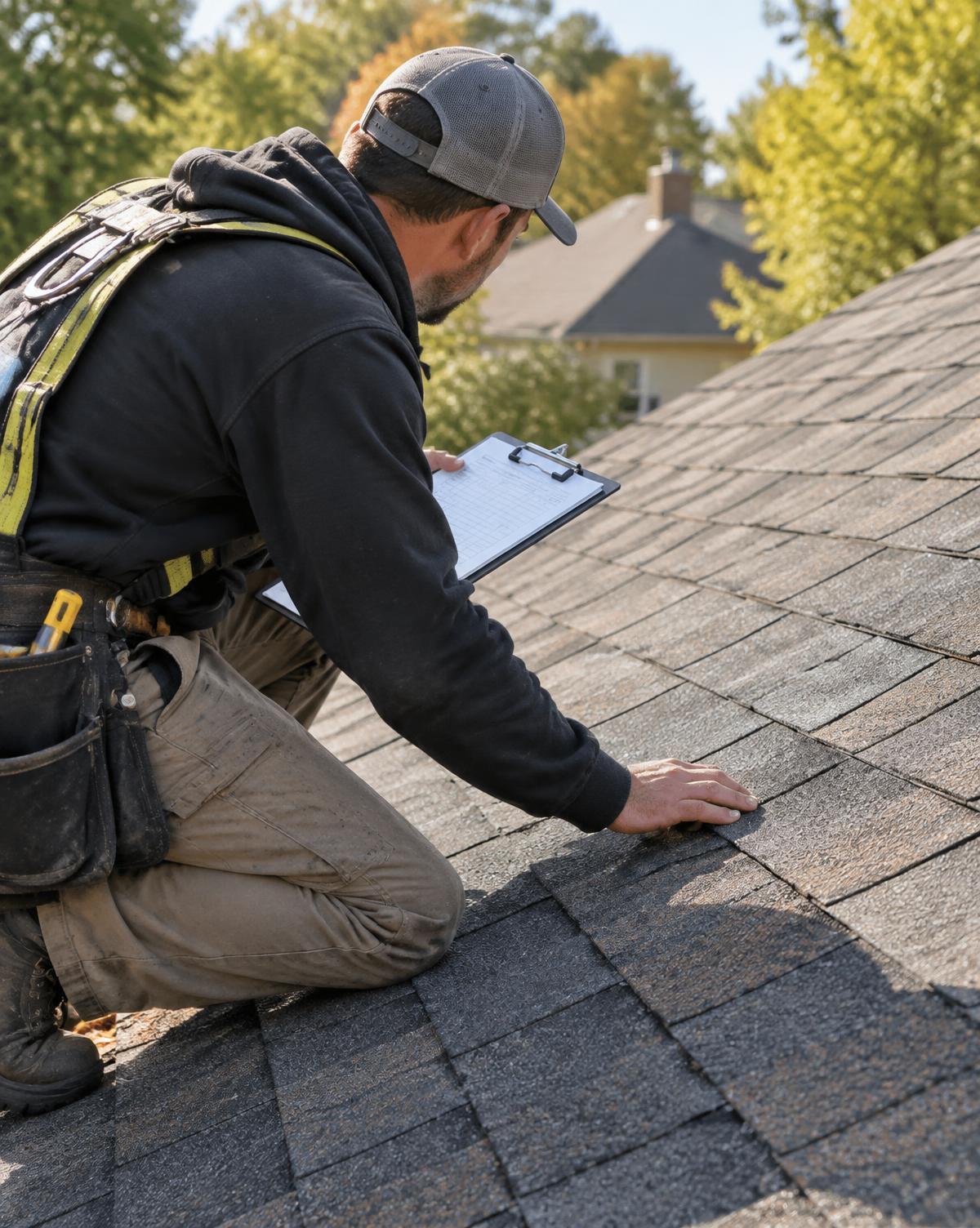
A professional inspection can confirm damage and support an insurance claim.
Prevent further damage
Temporary tarping can protect your home until repairs are made.